

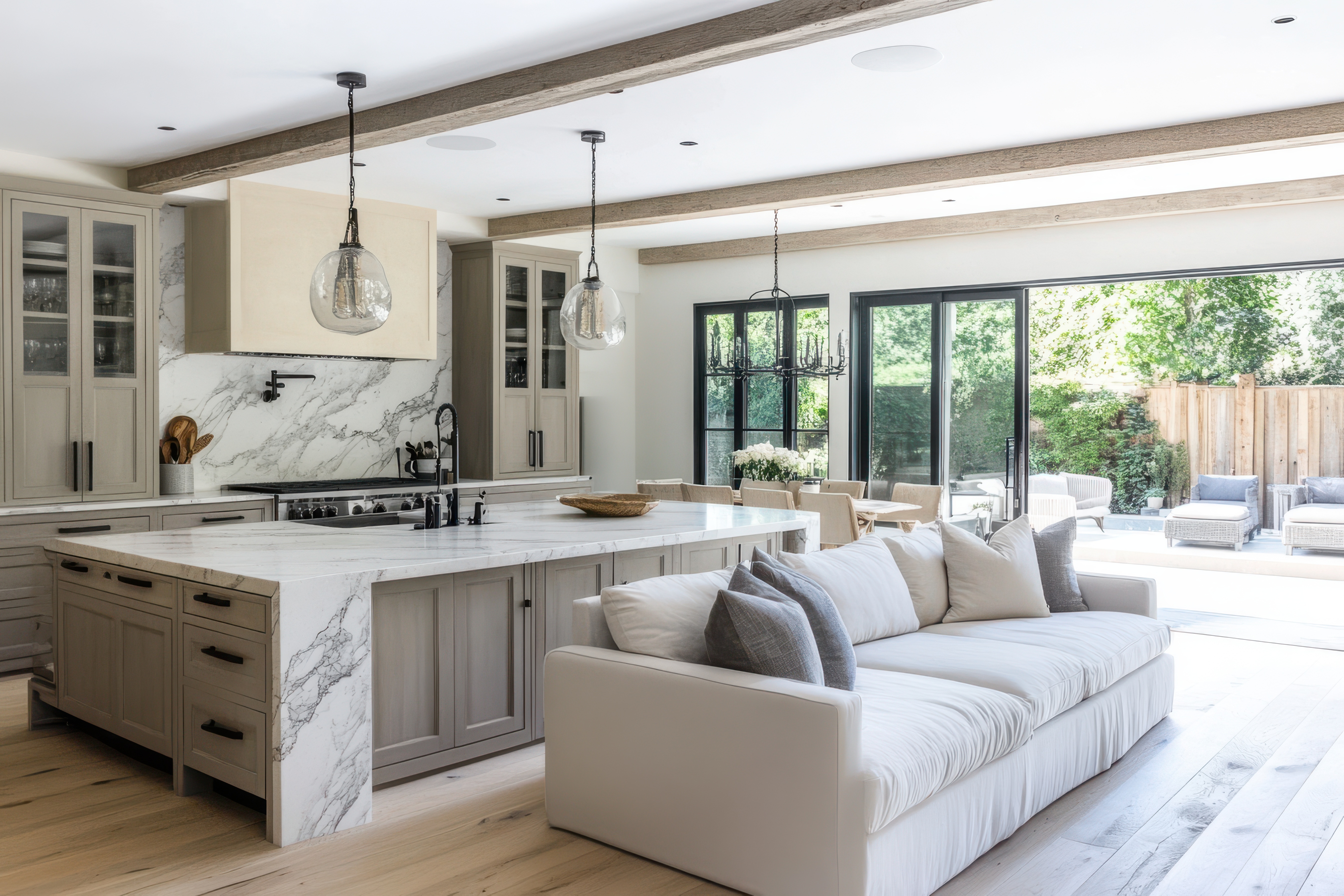
Choosing flooring by “light” or “dark” alone is where many good projects go sideways. What really changes the outcome is undertone. Two floors can both be labeled natural oak, warm brown, or gray-beige and still behave very differently once they meet your walls, cabinets, windows, and furniture. That is why a sample that looked perfect in the showroom can suddenly feel too pink, too yellow, too flat, or too cold at home.
For homeowners shopping hardwood or laminate, floor color is not just an aesthetic choice. It affects how bright a room feels, how clean it looks between cleanings, how large the space reads, and how easily the rest of the home comes together.
What undertones actually are
Undertones are the background color influences inside the floor’s visible color. In wood and wood-look flooring, the most common undertone families are:
Warm undertones such as yellow, honey, golden, red, or orange
Neutral undertones that sit more balanced and flexible
Cool undertones such as gray, taupe-gray, or muted ash-brown
The surface color is what you notice first. The undertone is what starts the argument with your paint, sofa, cabinets, or lighting.
A medium brown floor with a red undertone will feel very different from a medium brown floor with a muted taupe undertone. On a small sample board, that difference can seem minor. Across an entire room, it becomes the whole mood.
Why lighting changes everything
Flooring does not have a fixed appearance. It changes throughout the day based on natural and artificial light.
North-facing rooms usually pull colors cooler. Floors with cool undertones can start to feel flat or slightly dull there, while warmer floors often add balance. South-facing rooms get stronger, warmer light, which can intensify yellow, red, and golden undertones. East-facing rooms brighten in the morning and calm down later. West-facing rooms can get dramatically warm toward evening.
Artificial lighting matters too. Warm bulbs can make warm wood look richer or more orange. Cooler LEDs can flatten warmer woods and exaggerate gray tones in laminate or hardwood.
This is why flooring should never be chosen under one lighting condition alone. A floor that looks calm at noon may look busy at night under overhead lighting.
How floor color affects furniture
Flooring works like the base note in a room. It either supports everything else or quietly fights it.
If your furniture is mostly warm wood, leather, cream upholstery, or brass accents, warm or neutral floors usually connect more naturally. If your home leans into black metal, cooler whites, charcoal fabrics, or modern cabinetry, a cooler or more neutral floor may feel cleaner and more intentional.
The mistake is matching too literally. A floor does not need to be the same tone as furniture. It needs enough contrast to create separation, but not so much clash that one makes the other look accidental.
A few practical examples:
Dark walnut furniture over red-toned flooring can feel heavy and crowded
Gray floors with warm oak cabinets often create tension unless the bridge tones are handled carefully
Natural oak floors are often easier to decorate around because they leave more room for both warm and mixed finishes
Mood changes room by room
The same floor will not create the same emotional result everywhere.
In living rooms, undertones influence whether the space feels restful, formal, bright, or grounded. Warm floors usually feel softer and more inviting. Cooler floors often read cleaner and more architectural.
In bedrooms, flooring often works best when it reduces visual noise. Busy grain, strong contrast, or highly reactive undertones can make a room feel more alert than restful. Lower-contrast floors usually create a calmer effect.
In kitchens, undertones matter because flooring must live beside cabinets, counters, and backsplash materials. This is one of the easiest places for undertone mismatch to show up.
In smaller rooms or hallways, very dark floors can create depth, but they can also make the space feel tighter if wall color and light levels do not support them. Lighter floors can make circulation areas feel more open, but extremely pale floors may show more contrast with debris.
Hardwood and laminate both need undertone discipline
This is not only a hardwood issue. Laminate flooring can be even trickier because the print layer, embossing, and finish all affect how undertones read. Some laminates photograph well but feel artificial in person because the color is too uniform or the undertone is disconnected from the texture.
With hardwood, natural variation can soften the color story.
With laminate, consistency can be a strength, but only if the tone is realistic and the board design does not repeat too obviously.
How to test flooring the right way
Before you choose, place samples in multiple rooms and look at them:
In morning and evening light
Next to baseboards and trim
Against your cabinets
Beside your largest upholstered furniture
Under your actual bulbs, not only daylight
Also view the sample flat on the floor, not only upright. Flooring is lived with horizontally, and that changes how the color reflects light.
Floor color does not just change appearance. It changes how a home feels, how easily rooms come together, and how satisfied you are six months after installation. The right undertone can make furniture look better, lighting feel softer, and the whole room settle into place.
If you are comparing hardwood or laminate for your home, visit Mayfield Heights and North Royalton, OH and speak with Pavich Flooring about samples, room conditions, and real-life performance. We help homeowners across Cleveland, Parma, Akron, Lorain, Elyria, and Lakewood, OH choose flooring that works with their space, not against it. Contact us to start narrowing down the right floor color with confidence.


