

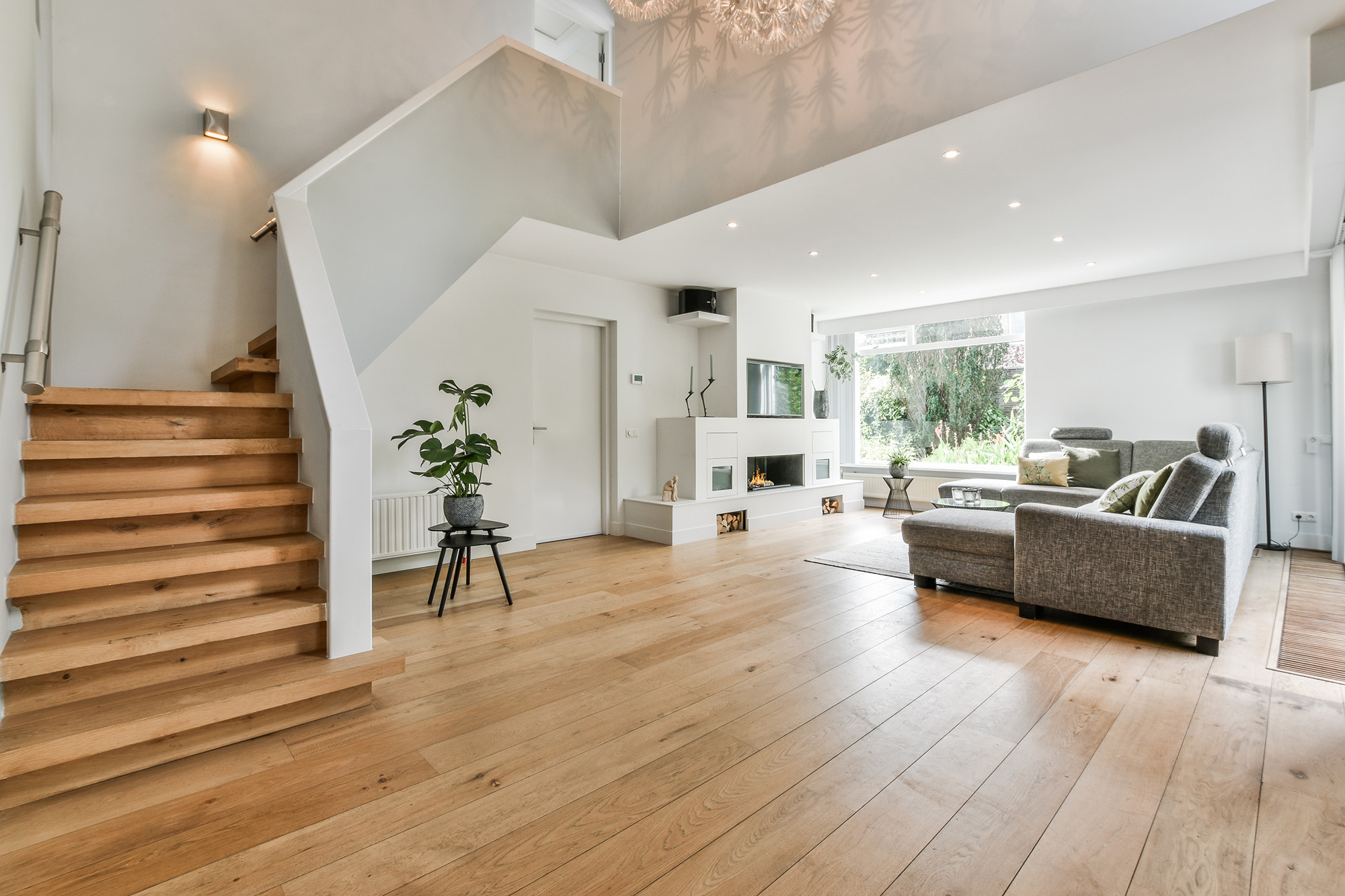
Why Stairs Squeak for a Completely Different Reason Than Floors Do
A flat hardwood floor squeaks when a board rubs against a nail or against a neighboring board as weight shifts across it. A staircase is built on an entirely different structure, with each tread resting on stringers, risers, and often a center support that all move independently under load. That means the squeak on a stair rarely comes from the tread itself, it comes from the connection between the tread and whatever is holding it up underneath.
This is worth knowing before assuming a squeaky stair means the wood needs replacing. In most cases, the tread is completely fine and the noise is coming from a loosened connection point beneath it, which is a very different repair than anything involving the hardwood surface itself.
What Is Actually Moving When a Stair Creaks
Most staircases are built with treads that sit in a notched stringer or rest on a ledger strip, and glued and screwed connections at both points. Over years of use, wood shrinks slightly with seasonal humidity changes, and that shrinkage can loosen the bond between the tread and the structure underneath it just enough to create movement. That small amount of movement is what produces the sound, not any actual damage to the tread.
This is also why a stair can develop a squeak years after installation, long after the hardwood floors at the top and bottom of the staircase have settled and gone quiet. The staircase experiences more repeated flex under foot traffic than a flat floor does, so the connections holding it together tend to work themselves loose sooner.
Why Fixing It From Below Works Better Than Fixing It From Above
If there is access to the underside of the staircase, from a basement or an open stringer, the most reliable fix is adding a wood shim with construction adhesive into the exact spot where the tread meets its support. This tightens the connection without touching the finished tread surface at all, which means no risk to the wood grain or finish that is visible from above.
When there is no access from below, fixing the squeak from the top usually means locating the loose spot and securing it with a specialized screw driven at an angle through the tread and into the stringer, then filling and finishing over the screw head. This works, but it does involve the visible surface of the stair, which is why checking for underneath access first is always worth doing before assuming a top down repair is the only option.
When a Squeaky Stair Actually Does Point to a Bigger Issue
A squeak that shows up gradually and stays consistent is almost always just a loosened connection, but a stair that has started to feel soft, springy, or noticeably different underfoot alongside the noise is worth a closer look. That combination can point to a support issue rather than simple wood movement, and it is not something to diagnose by sound alone.
A single consistent squeak on one or two steps is typically a loose connection point
A stair that feels soft or flexes underfoot alongside the noise deserves a structural look
Squeaking that spreads to multiple steps over a short period is worth having checked rather than shimmed one at a time
Most squeaky stairs are a straightforward, inexpensive fix, and the hardwood tread itself is rarely the actual problem, which is good news for anyone who assumed a full staircase replacement was coming.
If a staircase in your home has developed a squeak, or if you are simply curious what condition the hardwood is really in throughout the house, an in-home look is the most reliable way to know for sure. Pavich Flooring works with homeowners across Cleveland, Parma, Akron, Lorain, Elyria, and Lakewood, OH on everything from squeak repairs to full hardwood flooring replacement when it is actually needed. Stop by Mayfield Heights and North Royalton, OH to ask our team directly, or contact us to schedule a free evaluation.


