
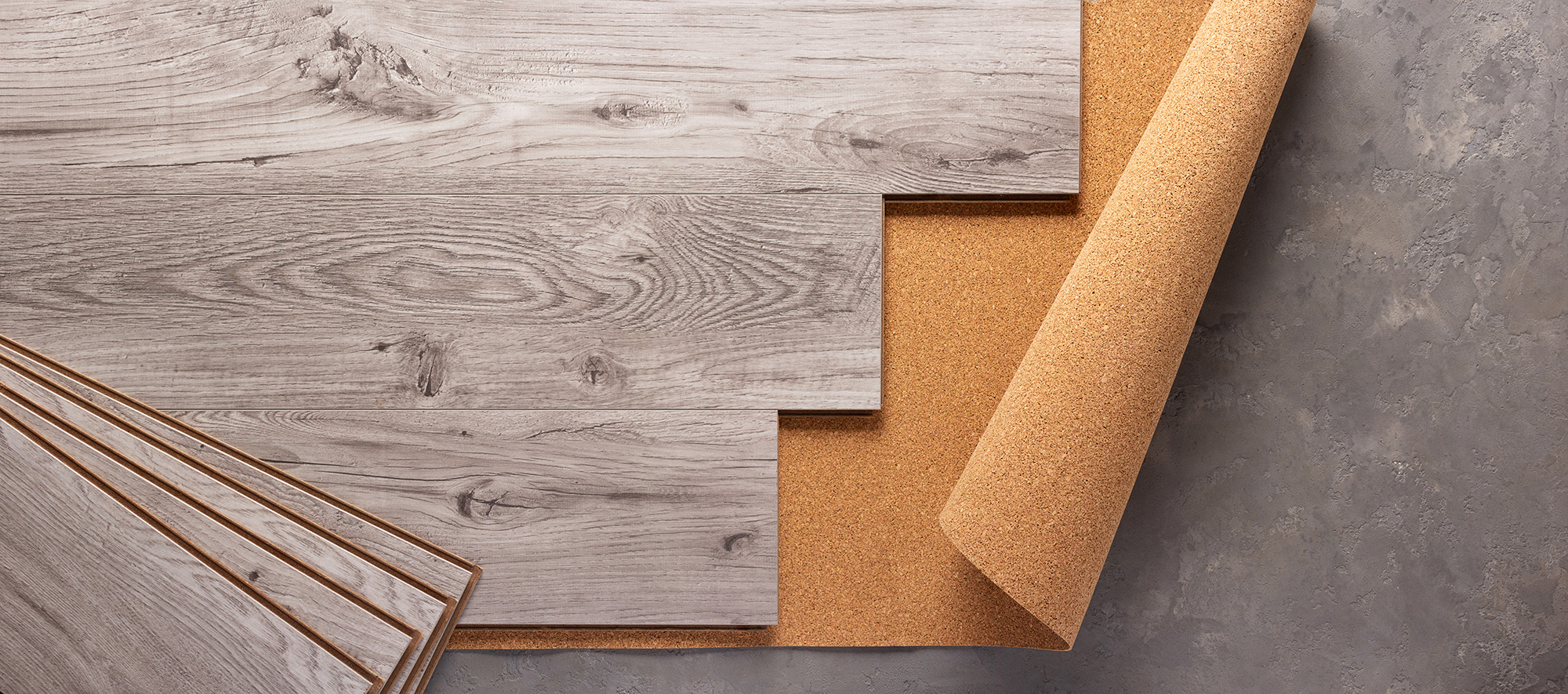
Buyers will spend weeks choosing a plank color and thirty seconds dismissing the underlayment. It's the dullest item on the quote and one of the most important. That thin layer between subfloor and finished floor quietly decides whether a room feels solid and stays quiet or turns hollow, loud, and prone to early trouble.
For a small slice of the total budget, underlayment protects everything above it. Choose the wrong one, or none at all, and it undermines a good floor from below, where you can't see it happening.
The Four Jobs It Does at Once
A proper underlayment smooths minor subfloor imperfections so planks sit flat and the locking joints engage cleanly. It cushions every footstep so the floor feels firm rather than hard and tiring. It absorbs sound. And in many installs, it carries the vapor barrier that keeps slab and crawl-space moisture away from your floor.
That last job is no small thing in Northeast Ohio, where basements and concrete slabs are everywhere. Leave the vapor barrier out over a slab in Parma or Elyria and you invite the trapped-moisture problems that cup planks and breed mold in the hidden space between layers.
The Two Sound Numbers That Matter
Floor noise comes down to two ratings that measure different things. IIC, the Impact Insulation Class, scores how well the floor blocks impact sound like footsteps, dropped items, and dog claws. STC, the Sound Transmission Class, scores airborne sound such as voices and television moving between levels.
Higher is quieter on both. If you're installing a hard floor above a living space, IIC is the number to ask about, and a good underlayment can raise it meaningfully. With laminate especially, the right underlayment is also what eliminates the hollow, clicky echo that gives a cheap install away the second you walk in.
Match It to Your Floor and Subfloor
There's no one-size product, and mismatching costs you the benefit. A quick guide:
Laminate over a wood subfloor: foam or felt, often with an attached vapor film, for cushion and quiet.
Laminate or engineered wood over concrete: always a moisture barrier, usually a combination underlayment that handles vapor and sound together.
Nail-down hardwood: typically breathable rosin paper or felt that silences squeaks without trapping moisture.
One firm rule. If your plank already has a pad attached, never stack a second separate pad beneath it. Excess cushion flexes the joints until they fail.
Don't Let the Smallest Layer Be the Weak Link
The story repeats in homes all over the region. A beautiful new floor that sounds hollow, feels hard, or starts gapping within a season or two, every time traced back to a skipped or mismatched underlayment. It's a modest cost that decides how the whole floor performs and how long it survives.
Get this layer right and your hardwood or laminate feels better the day it's installed and ages better every year after.
You shouldn't have to study acoustics and vapor dynamics to get a quiet, durable floor. The team at Pavich Flooring will inspect your subfloor, recommend the exact hardwood or laminate underlayment for your conditions, and build the install to last from the bottom up.
We serve homeowners throughout Cleveland, Parma, Akron, Lorain, Elyria, and Lakewood, OH and are glad to show you how the right pairing feels underfoot. Visit Mayfield Heights and North Royalton, OH to compare complete hardwood and laminate systems, or contact us for a fully specified quote with the underlayment built in, not tacked on.


