

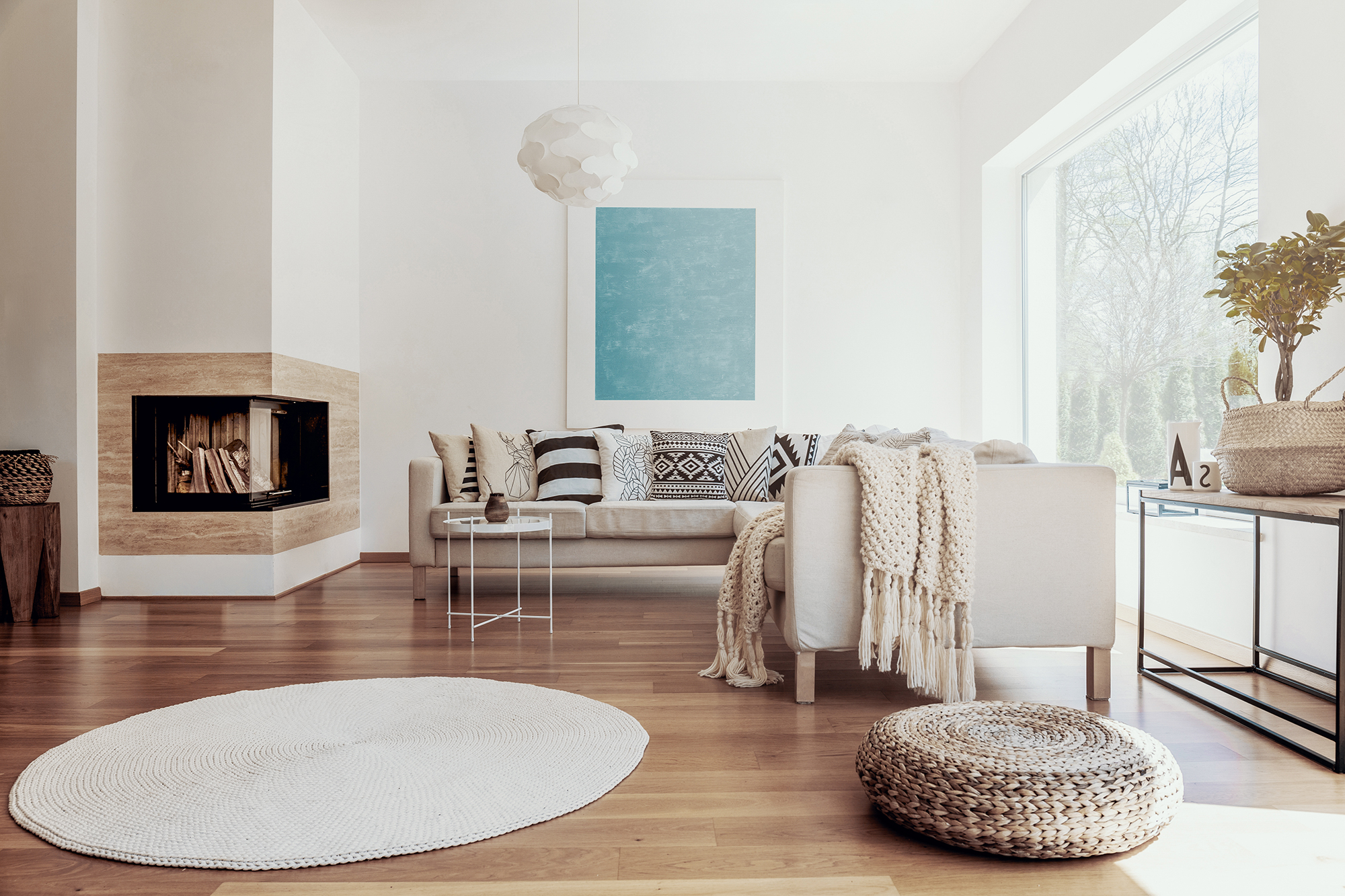
If your floor sample looks gorgeous in your hand but your brain feels tired when you imagine it across 400 square feet, that’s not you being picky. That’s pattern overload. In 2026, the design trend is shifting away from “statement wood” and toward calmer, warm-neutral backdrops, especially in open-concept homes and rooms already full of visual texture.
At Pavich Flooring, we see this exact problem play out in real homes when people visit Mayfield Heights and North Royalton, OH: a plank that looks premium on a sample rack can turn into visual confetti once it’s installed wall-to-wall.
Below is the technical way to choose a wood or wood-look floor that reads intentional instead of chaotic.
1) Understand “pattern repeat” like a pro (not a marketing term)
Pattern repeat is how often the same grain image or similar-looking grain features (cathedrals, knots, streaks) show up across the installed floor.
In laminate, repeat comes from the printed décor layer. If the product only has a small number of unique plank visuals, you’ll see clones.
In hardwood, repeat comes from milling grade + cut (plain-sawn vs rift/quarter) and how boards are mixed during install.
Late-night Google truth: the eye doesn’t hate grain. It hates predictable repetition and high-contrast “events” happening too often.
2) The real culprit: “event density”
A floor feels busy when it has too many high-impact features per square foot:
strong cathedrals (arched grain)
heavy mineral streaks
frequent knots
extreme light-to-dark variation in adjacent boards
hard bevel shadows that outline every plank
Hot take: A lot of “rustic” visuals read as clutter when your room already has clutter (kids, pets, toys, open shelving, patterned rugs). Rustic floors can make a normal family home feel permanently unfinished.
3) Choose a calmer cut or grade when possible
If you’re shopping hardwood:
Plain-sawn boards show more cathedral grain (more movement, more drama).
Rift-sawn is straighter and calmer (often the most “quiet luxury” look).
Quarter-sawn can be straight with ray fleck (texture, but more controlled).
If you’re shopping laminate:
Ask for products marketed as low-repeat or high-variation with many unique planks (then verify with the test below).
Avoid ultra-high-contrast “hand-scraped” looks unless your room is minimalist.
4) Do the “12-plank test” before you commit
In the showroom, don’t just pick one favorite plank. Ask to see multiple planks laid next to each other.
What you’re looking for:
Can you spot duplicates quickly?
Do 2–3 planks dominate the look (same cathedral, same knot cluster)?
Does it look “stripy” when laid in a row?
If duplicates jump out in a tight sample layout, they’ll scream across the full room.
5) Watch out for plank bevels and sheen
Even a calm grain can look busy if plank edges are over-emphasized.
Heavy bevels create a shadow grid, making floors feel more segmented.
Higher sheen reflects light and amplifies grain contrast and texture.
If your goal is calm, lean toward matte/low-sheen and moderate beveling.
6) Match grain intensity to room function
A simple rule that works:
Bedrooms + offices: calmer grain, lower contrast, fewer “events” (better for relaxation and focus).
Mudrooms + hallways: you can handle more variation because the room is transitional.
Open-concept main floors: calmer grain nearly always looks higher-end.
7) Layout can either calm or amplify busyness
Long planks laid lengthwise can reduce visual chopping and make spaces feel larger.
Avoid layouts that create constant visual interruption unless your floor is very quiet.
Use transitions wisely so your floor doesn’t fight adjacent materials (especially in open plans).
The best-looking floors aren’t the ones with the most “character.” They’re the ones with the right pattern repeat, event density, sheen, and layout for your actual life. If you want a floor that feels calm, modern, and warm-neutral without looking flat, visit or contact Pavich Flooring. We’ll help you compare planks the right way across Cleveland, Parma, Akron, Lorain, Elyria, and Lakewood, OH.


