

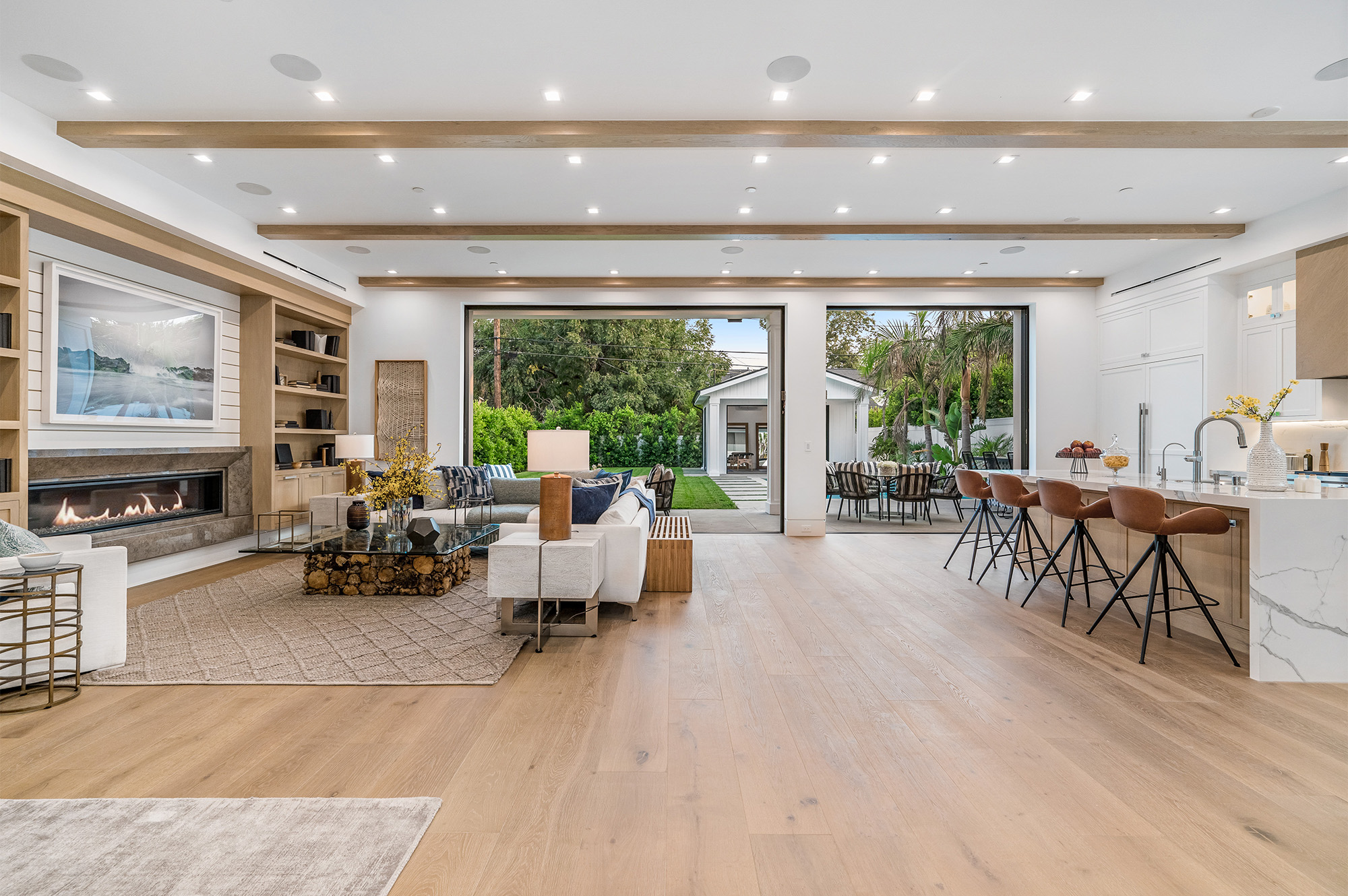
Wide plank flooring looks incredible—but many homeowners aren’t prepared for how it sounds. In open-concept homes especially, plank width plays a major role in acoustics, footfall noise, and how sound travels from room to room.
At Pavich Flooring, we regularly help Ohio homeowners troubleshoot echoey living rooms, hollow footsteps, and noise transfer after wide plank installs. Before you commit, it’s worth understanding the mechanics behind it. Visit us at Mayfield Heights and North Royalton, OH to experience the difference in person.
Why Plank Width Changes Sound Behavior
Wide plank flooring—typically 7 inches and wider—covers more surface area per board. That changes how vibrations move through the floor.
Key acoustic effects include:
Fewer seams to break up sound waves
Larger boards transmitting vibration more efficiently
Greater sensitivity to subfloor imperfections
In open layouts with high ceilings and minimal soft furnishings, this can amplify echo and reverberation.
Solid vs Laminate vs Engineered: Sound Profiles
Not all wide plank floors sound the same.
Solid hardwood (nail-down):
Denser material absorbs vibration better
Tighter subfloor contact reduces hollow sound
Less footfall noise when properly fastened
Engineered wide plank (floating or glue-down):
More prone to sound reflection if floating
Depends heavily on underlayment quality
Most susceptible to hollow acoustics
Requires acoustic-rated underlayment
Subfloor flatness is critical
This is why “it looked great in the showroom” doesn’t always translate acoustically at home.
Underlayment Is Not Optional
Underlayment is the primary sound control layer for floating wide plank floors.
For Ohio homes, the right underlayment should:
Reduce impact sound (IIC rating)
Limit vibration transfer between planks
Add compression resistance to reduce flex
Thin foam underlayments save money—but increase echo and movement. In open living spaces, thicker, denser underlayments dramatically improve sound quality.
Subfloor Flatness and Noise
Wide planks exaggerate imperfections. A subfloor that’s even slightly uneven causes:
Micro-gaps beneath boards
Increased flex underfoot
Louder footfall and clicking
In older Northeast Ohio homes, subfloor prep is often skipped—and the acoustics suffer immediately.
Furniture, Textiles, and Real-World Fixes
Acoustics aren’t just about flooring. Rugs, upholstered furniture, curtains, and wall treatments all absorb sound. Homes with wide plank floors and minimal soft surfaces will always feel louder.
This is especially noticeable in:
Open kitchens connected to living rooms
Vaulted ceilings
Stair-adjacent great rooms
Planning flooring and furnishings together avoids regret later.
Final Thoughts
Wide plank flooring changes more than aesthetics—it reshapes how your home sounds and feels. When installed correctly with the right materials, it creates warmth and presence instead of echo and noise.
If you’re considering wide plank flooring, visit Pavich Flooring at Mayfield Heights and North Royalton, OH or call us today for a free flooring estimate. We proudly help homeowners across Cleveland, Parma, Akron, Lorain, Elyria, and Lakewood, OH choose floors that look and live better.


