

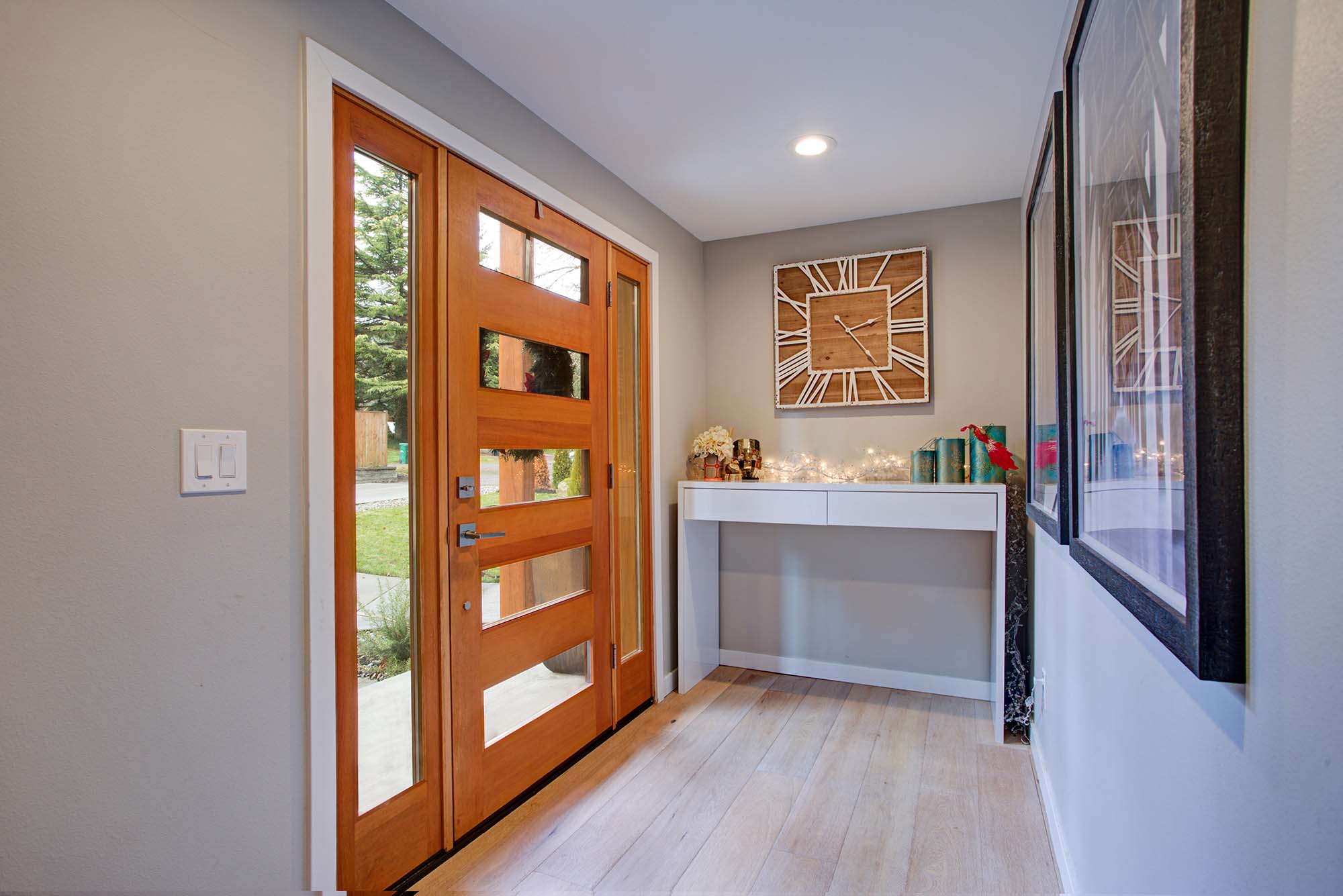
Why a Mudroom in This Region Is a Tougher Test Than a Typical Entryway
A mudroom anywhere deals with water and dirt, but a mudroom in a Great Lakes winter climate deals with something more specific, which is de-icing chemicals tracked in on boots and tires from driveways and sidewalks. Calcium chloride and sodium chloride based products behave differently once they dry on a floor, and both can leave a residue that sits on the surface longer than plain water would, especially in a room where boots come off and stay for a while before drying completely.
This is different from the kind of moisture exposure most flooring marketing addresses, which tends to focus on spills or humidity rather than repeated exposure to de-icing residue tracked in over an entire winter season. It is worth thinking about a mudroom as its own category of room rather than just a slightly wetter version of an entryway.
What Actually Matters More Than the Word Waterproof
Laminate marketed as waterproof or water resistant is describing how the core reacts to moisture exposure, which is genuinely useful in a mudroom, but it is not the whole picture. The seams between planks are almost always the more vulnerable point, since standing moisture or residue that sits at a seam for an extended period can find its way past even a well sealed surface over time.
This is why a mat or boot tray at the door matters more in this specific room than it might elsewhere in the house, not because the laminate cannot handle occasional moisture, but because reducing how much de-icing residue reaches the seams in the first place extends how well any flooring product performs there long term. The product matters, but so does the daily habit of managing what actually reaches the floor.
Why Wiping Is Not the Same as Rinsing
A quick wipe with a dry or damp cloth removes visible dirt, but dried salt residue does not always lift with a simple wipe the way people expect. Left in place, that residue can continue drawing in moisture from the air, which keeps the immediate surface area slightly damp longer than the rest of the room even after it looks clean.
An occasional rinse with clean water, followed by drying the area rather than letting it air dry on its own, does a better job of actually removing residue than routine wiping alone. This is a small habit difference, but it is the kind of detail that determines whether a mudroom floor still looks good after several winters instead of just one.
What This Means for Choosing a Product
None of this rules laminate out for a mudroom, it just means the decision should account for daily exposure over years, not just the room's look on installation day.
Look specifically for a waterproof or water resistant rated laminate rather than a standard interior product
Ask about seam sealing and installation method, since a properly installed floating floor performs differently than a rushed one
Plan for a mat or tray at the door as part of the room, not as an optional add on
A mudroom built for this climate is asking more of a floor than most rooms in the house, and the right laminate paired with reasonable daily habits can hold up to that, provided the product and the room are both set up with that reality in mind from the start.
If you are flooring a mudroom that needs to handle a real Northeast Ohio winter, that is exactly the kind of room worth talking through in person before choosing a product. Pavich Flooring helps homeowners across Cleveland, Parma, Akron, Lorain, Elyria, and Lakewood, OH choose laminate flooring built for exactly this kind of daily exposure. Stop by Mayfield Heights and North Royalton, OH to see waterproof laminate options in person, or contact us to talk through your mudroom project.


